Ridges, Not Radiators: A Late-Night Dinner Routine Built on the Grill Pan
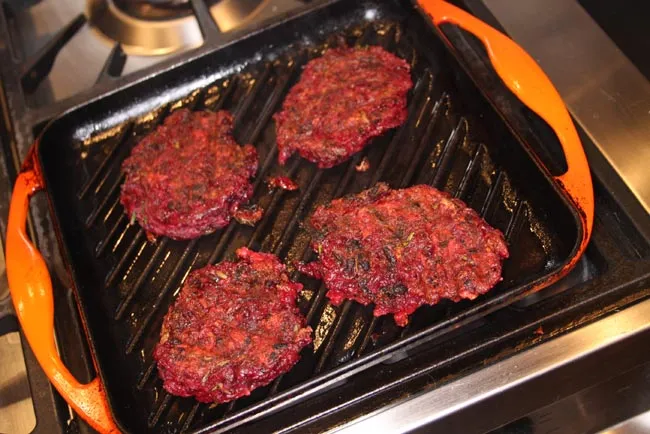
Photo: CookipediaChef, CC BY 3.0, via Wikimedia Commons
There is a specific kind of hunger that arrives at 8.40pm on a Wednesday. It is not the sort that wants a project. It wants something hot, salty and charred, on a plate, within the length of one podcast episode. And the thing standing between you and that plate is usually the oven, which wants twelve minutes to reach temperature before it will even consider the chips.
The grill pan skips that negotiation. It is the piece of kit that lives at the back of the cupboard behind the roasting tin, brought out twice a year for sausages in July and then forgotten. Which is a shame, because it is arguably the most useful pan in a small kitchen — faster than the oven, more forgiving than the frying pan, and it produces the one flavour that a beige January dinner desperately needs: a bit of char.
What the ridged pan actually does well
A hot grill pan works by direct contact. The ridges hold the food just above the surface, so the parts touching metal go dark and crisp while the steam escapes through the gaps. You get browning on the outside without the inside turning to rubber, and you get it in minutes rather than the twenty-five a traybake needs.
It also gives you a Maillard reaction without a full oven's worth of electricity and heat. That matters if you're cooking for one in a flat where the kitchen is also the hallway. Three minutes of preheating versus fifteen is not a small difference at half eight at night — it's the difference between cooking and ordering.
The trade-offs are honest ones. It smokes a bit, so the extractor fan needs to go on before the pan does, not after. It only holds one layer of food, so you cook in batches and keep things warm under a bit of foil. And a cheap non-stick version will lose its coating within a year or two. A cast-iron one, looked after, will outlast the kitchen.
The formula: protein, quick veg, something that soaks
You don't need a recipe. You need three slots.
The first is a protein that cooks in under six minutes a side — lamb leg steaks, halloumi, salmon or trout fillets, thin chicken escalopes, prawns, a couple of good sausages if that's what's in the fridge. The second is a vegetable that softens fast and takes char well: courgette in long ribbons, peppers in wide strips, tenderstem broccoli, spring onions, halved cherry tomatoes, a quartered little gem.
The third slot is the one people forget, and it's the one that makes the plate feel like dinner rather than a diet: something starchy to soak up the juices. A flatbread warmed on the ridges for forty seconds. Sourdough brushed with the oil left in the pan. New potatoes boiled on Sunday and finished cut-side down. A spoon of yoghurt with lemon and salt counts too, if the bread has run out.
Season everything before it hits the metal, brush the food with oil rather than flooding the pan, and don't crowd it. Two batches beats one soggy one.
Three combinations for a normal week
Lamb leg steaks, courgette ribbons and a folded flatbread. Lamb leg steaks are cheap, cook in about three minutes a side and give off enough fat to cook the courgette in afterwards. Salt the lamb, let it sit while the pan heats, then cook it and rest it on a board. Courgette ribbons straight into the same pan for ninety seconds, a squeeze of lemon, and a flatbread warmed on top of the whole thing at the end. Serve with mint yoghurt if there's any in the fridge.
Halloumi, peppers and sourdough. The vegetarian option that doesn't feel like a compromise. Sliced halloumi, red pepper strips and thick sourdough, cooked in that order. The halloumi releases enough salt and fat that the peppers need nothing else. A handful of rocket on top, a drizzle of honey over the halloumi if you're feeling generous.
Trout fillets, tenderstem broccoli and pre-cooked potatoes. This is the one for the nights when you need dinner in ten minutes flat. Potatoes go cut-side down first, three minutes, then out onto plates. Broccoli gets four minutes in the gaps, lid or foil over the pan to steam the tops. Trout skin-side down last, three minutes, no flipping needed. Everything hits the plate at roughly the same time, which is the whole point.
The ten-minute sequence
Pan on the hob, high heat, extractor fan on. While it warms, get the protein out of the fridge, pat it dry and season it. Chop the veg into pieces roughly the same size. Find the bread. Everything you need should be within arm's reach before the first thing goes in, because once you start there's no time for cupboard archaeology.
Cook the starchy thing first if it's potatoes or bread, and set it aside under foil. Then the protein, skin-side or fat-side down first, and don't move it for the first two minutes. Then the veg in the same pan, using the fat the protein left behind. Rest the protein for the length of time it takes the veg to cook. Plate, eat, and fill the pan with hot water before you sit down.
Washing up that doesn't ruin the evening
One pan, one board, one knife. That's the deal. The pan gets a splash of hot water and a drop of washing-up liquid the moment the food is plated, while it's still warm. By the time you've eaten, it wipes clean in ten seconds. Leave it to go cold and you'll be chipping at it with a spatula.
If the smoke is more than the extractor can handle, open a window before you start. A ridged pan on full heat is a small, contained event, and it's worth the jumper.
Making it a habit rather than an occasional idea
Keep the pan on the hob rather than in the cupboard. Keep a bag of flatbreads in the freezer and a couple of pre-cooked potatoes in the fridge. When you do a shop, buy two proteins instead of one, and put a vegetable in the drawer that you'd genuinely eat raw if the plan collapsed. And write the three combinations from this article on a scrap of paper and stick it to the fridge door, because at 8.40pm on a Wednesday, the last thing you need is to invent a dinner from scratch.
The oven is still there. It's just not the only option anymore.