Friday, Cleared: A Lunch Built From the Back of the Fridge

Photo: leftover vegetables cheese on wooden board fridge shelf home kitchen UK, via i.pinimg.com
By Friday, the fridge has a particular look. Half a pepper going soft at the edge, a carrot that has seen better days, the end of a block of cheddar, and a tub of something you bought with good intentions on Monday. The temptation is to ignore it, write a list and start again at the shop. That is how the same six items end up in the bin most weeks.
The Friday drawer lunch is the opposite. It is a deliberately loose formula that turns the week's odds and ends into a proper plate, no recipe required. Think of it less as cooking and more as clearing up with benefits.
The formula is a shape, not a shopping list
You do not need to hit every part perfectly. The point is to stop lunch tasting like a fridge clear-out.
Start with a base. That can be toast, a wrap, cold pasta, couscous, leftover potatoes, or a handful of bagged leaves. It is there to hold the rest together, not to be the star.
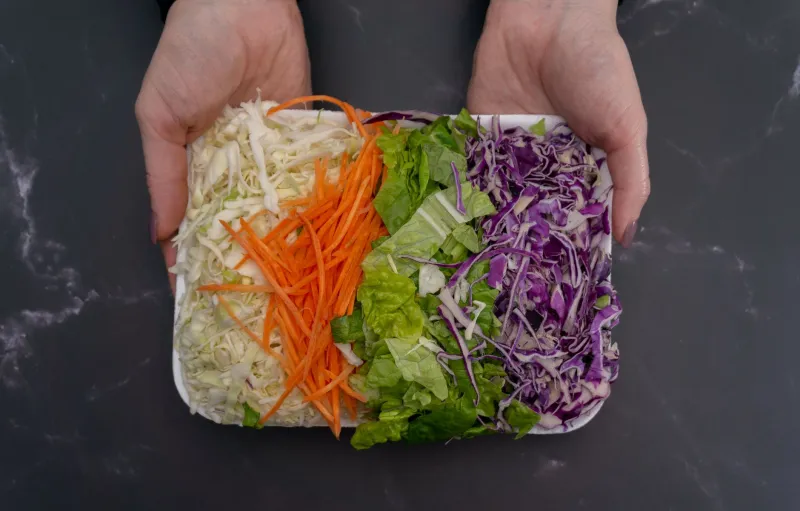
Add crunch. This is where the tired vegetables earn their keep. Chop half a pepper small, grate a carrot, slice cucumber, shred cabbage, or use the last of a bag of salad. Small pieces help because soft veg suddenly feels intentional rather than sad.
Then protein. Mature cheddar, mozzarella, a boiled egg, a tin of chickpeas, leftover chicken, tuna, houmous, or a spoon of yogurt. Supermarket own-brand versions are fine. This is not a tasting menu.
Finish with something sharp. Pickle, mustard, lemon juice, vinegar, hot sauce, capers, or a spoon of yogurt with salt and pepper. This is the bit that makes the whole thing taste like lunch instead of a tidy-up.
A Friday example: a wrap with bagged spinach, grated carrot, chopped pepper, crumbled cheddar, a spoon of pickle and a squeeze of lemon. Another: cold pasta with tuna, cucumber, a little red onion if you have it, and mustard whisked into yogurt. Neither needs a recipe because neither assumes you went shopping first.
Two minutes, one board, no performance
The practical version is this: open the fridge, take out everything that needs using, and put it on one board. Check use-by dates first. Then chop the soft things small, warm one element if you want it — toast, an egg, leftover potatoes — and assemble.
You are not trying to make a beautiful bowl. You are trying to make Friday lunch happen before the shop, using what is already there. A fork and a mug of tea are legitimate equipment.
If you have five minutes rather than two, roast the tired veg in a hot oven with oil and salt while you put the rest together. If you have two, raw and chopped is fine. The formula bends.
The boring bits that matter
Food safety is not the glamorous part of using things up, but it is the part that keeps the habit worth having.
Keep the fridge at 5°C or below. Cool leftovers quickly, get them in the fridge within two hours, and eat them within two days. Cooked rice is the exception to be careful with: cool it fast, fridge it straight away, and eat it within 24 hours rather than pushing it to day two. Reheat leftovers until steaming hot, and only reheat once.
Use-by dates are about safety; best-before dates are about quality. If something is past its use-by date, it goes. If it is past best-before but looks and smells fine, use your judgement — but do not rely on smell alone for safety. If it is slimy, mouldy or smells wrong, bin it. No lunch is worth a bad afternoon.
Why clearing up beats planning perfectly
Meal plans assume the week goes to plan. Most weeks do not. A pepper gets left, a tub gets opened and half-used, someone has toast for tea instead of the thing they intended. A perfect plan can quietly become a guilt document.
Using it up is a more forgiving habit. It says: the fridge is a working cupboard, not a museum. Friday lunch is the moment to reset it before the weekly shop, so you start the next week with space rather than archaeology.
It also saves money without turning into a spreadsheet. You are not batch-cooking or following a system. You are eating the half-pepper, the end of the cheese and the last carrot, then going to the shop with an empty shelf and a clearer head.
At Eat Live, we are not interested in making lunch another task to fail at. The Friday drawer lunch is a small routine with a low bar: clear the shelf, build a plate, eat, then shop. The fridge is emptier, the bin is lighter, and lunch happened. That is a good Friday.