The Finishing Shelf: A Small Habit That Stops Dinner Tasting Beige

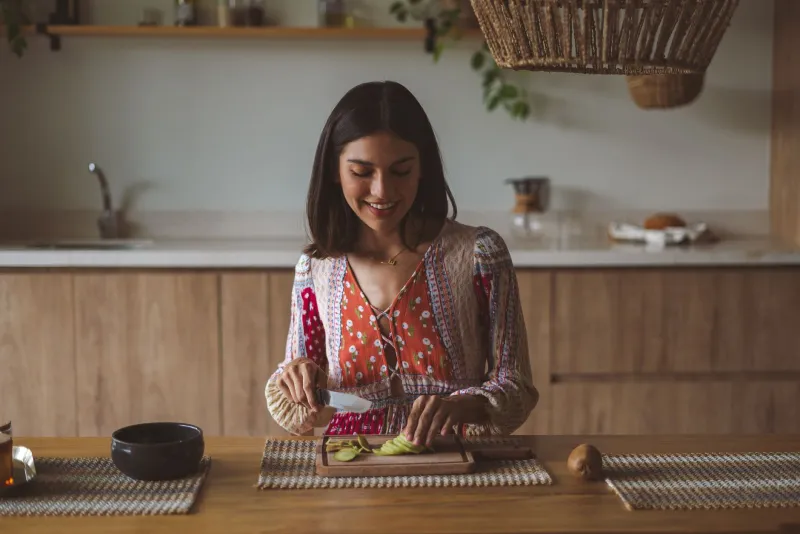
Photo: home cook finishing bowl of soup with lemon and toasted seeds on kitchen counter UK, via heartstrongwealthplanning.com
It is 6:40 on a Tuesday. You have made a tray of sausages and peppers, or a pan of lentils, or a pasta bake that looked promising in the pan. It is fine. It is technically food. But it tastes like the idea of dinner rather than dinner itself.
That flatness is not a character flaw and it is not proof that you cannot cook. Most home cooking goes wrong at the very end, not the beginning. The recipe was followed. The vegetables were chopped. The oven did its thing. What was missing was the last thirty seconds — the bit where you taste, adjust and give the food a reason to be noticed.
Restaurants are not magic. They are just more likely to finish a dish before it leaves the pass. You can do a smaller, cheaper version of that at home without turning your kitchen into a project.
Why a good recipe can still land flat
A recipe can be correct and still boring. It can have the right ingredients, the right cooking time and the right colour, and still arrive at the table with nothing to say.
Usually one of three things is missing. The food is under-seasoned, so everything tastes distant. There is no acid, so the whole plate feels heavy and brown. Or there is no crunch, so every mouthful has the same soft texture and your brain switches off after four bites.
British home cooking is particularly good at the soft-and-savoury thing. Stews, soups, bakes, mash, beans, porridge, traybakes. Comforting, yes. But comfort food can slide into wallpaper food if there is no final contrast.
This is not about adding more ingredients. It is about adding the right small thing at the right moment. Salt, acid and crunch are not a new diet trend. They are just the three dials most likely to be turned down when you are tired.
Fix one: salt, but taste first
Salt is the least glamorous fix and the one most likely to be misunderstood. The answer is not to dump a handful into the pan and hope. The answer is to taste as you go, especially near the end.
A lot of home cooks season at the start and then never again. But water evaporates, pasta absorbs, potatoes soak up salt and sauces reduce. Something that tasted right twenty minutes ago can taste flat now. A small pinch at the end can bring the whole thing back into focus.
Keep flaky salt in a small bowl near the hob, or a pinch pot if you have one. It is easier to add a little than to fix a lot. If a dish tastes like it is nearly there but somehow far away, salt is often the first thing to try. If it already tastes salty and still dull, stop. The problem is probably acid.
Most of the salt in the UK diet comes from processed food, not from a pinch over a pan of sprouts. Cooking from scratch gives you more control, not less. Taste, season, taste again. That is the whole routine.
Fix two: acid is the volume knob
Acid is the fix people forget because we tend to file lemon under fish and vinegar under chips. But a squeeze of lemon or a teaspoon of vinegar can make a dull dish taste like it has been switched on.
Think of acid as the volume knob. It does not add a new flavour so much as make the existing flavours louder and clearer. If a dish tastes heavy, muddy or somehow 'brown', acid is usually the answer. A lentil soup with a splash of red wine vinegar tastes like a different soup. Greens with lemon are not fancy; they are just awake. Tuna mayo with a spoonful of pickle juice is a small miracle.
Start small. A quarter of a lemon, a teaspoon of cider vinegar, a forkful of chopped pickles. Add it off the heat, taste, then add more if needed. Lemon squeezed over a hot pan can turn bitter; vinegar added early can cook down and disappear. The end is usually the right moment.
Keep one acid you actually like. A bottle of cider vinegar. A jar of gherkins. Lemons in the fridge drawer. You do not need all of them. You need one that is close enough to reach when dinner is nearly done.
Fix three: crunch is the difference between fed and pleased
Crunch is the most underrated of the three because it feels like garnish, and garnish feels like showing off. It is not. Texture is a big part of how satisfying a meal feels, and soft food with no contrast can feel like eating with the lights off.
You do not need to deep-fry anything. A handful of toasted seeds on soup. Crispy onions on a bowl of dal. Crushed poppadoms over a curry. Toasted breadcrumbs on pasta. A few roasted chickpeas on a traybake. Even a small pile of shredded cabbage or quick-pickled onions gives you something to push against.
Keep a tub of seeds in the cupboard and toast a batch once a week if you can be bothered. Keep crispy onions in the cupboard for the days you cannot. Crunch goes on last, right before eating, or it goes soft and you have wasted your effort. A little goes a long way. You are looking for contrast, not a topping avalanche.
The finishing shelf, not the perfect pantry
This does not need to be an Instagram shelf. It can be a small tray next to the hob, a drawer, or the door of the fridge. The point is proximity. If the fixes are at the back of a cupboard behind three bags of rice, they will not happen.
Put five things within reach: flaky salt, a pepper grinder, one acid, one crunch and a small jar of pickles. That is it. A lemon in a bowl. A bottle of cider vinegar. A tub of toasted seeds. A jar of crispy onions. Maybe a small pot of chilli flakes if that is your thing, though that is a fourth dial and not the subject here.
When you shop, buy one acid and one crunch alongside your normal shop. When you cook, taste at the end and ask three questions: does it need salt, does it need lift, does it need texture? Add one thing. Taste again. Add another only if it genuinely needs it.
A thirty-second Tuesday routine
You take the pan off the heat. You taste a spoonful. It is fine but forgettable. You add a small pinch of salt. Better, but still a bit heavy. You squeeze in a little lemon. Now it tastes like something. You scatter a small handful of toasted seeds over the top. Done.
That is not a recipe. It is a habit. It costs almost nothing and it takes less time than finding a new recipe you will not cook. It will not make every dinner brilliant. It will stop a lot of ordinary dinners from tasting beige.
The finishing shelf is not about perfection. It is about attention. A dull dinner is not a moral failure. It is just a meal that has not had its last thirty seconds yet.