Before Tea, Not Instead of Tea: Making the Hungry Half Hour Work
It is 5:40pm on a Tuesday. You have closed the laptop, kicked off the shoes and walked into the kitchen with the vague sense that you should start dinner. Instead, you open the cupboard. Then the fridge. Then the cupboard again. Ten minutes later, you are eating crisps standing up and wondering whether tea is still happening.
That window between work and dinner is not a character flaw. It is a gap in the day, and gaps tend to get filled by whatever is nearest. At Eat Live, we are not interested in telling you to toughen up and wait. We are interested in giving the gap a bit of structure so that dinner still happens, and so that you do not arrive at 7pm feeling either stuffed or strangely hollow.
The gap is not a willpower problem
By the time you get home, you have probably made a hundred small decisions already. Hunger is real, tiredness is real, and the kitchen is full of things that require no effort at all. A biscuit does not ask you to chop an onion. A handful of crisps does not need a pan.
The mistake is treating the pre-dinner window as though it should be empty. It rarely is. If you leave it unstructured, the easiest calories win. If you over-structure it, you create another job to fail at. The middle ground is simpler: decide what the gap is for.
Give the gap a job
The gap is not a second meal. It is not a test of discipline either. It is a bridge between the end of the working day and the start of dinner. A good bridge does three things: it takes the edge off hunger, it moves dinner a little closer, and it signals that tea is still on the cards.
You do not need all three every day. One is often enough. The point is to have a small routine you can reach for when the cupboard starts calling.
Put a small plate on the table
A small pre-dinner plate is not a starter and it is not a snack free-for-all. It is a deliberate, boring, repeatable thing you eat while dinner is getting itself together. Think yoghurt with a spoon of oats, an apple with peanut butter, a boiled egg and a few crackers, hummus with carrot sticks, or leftover roast vegetables from the fridge.
The plate matters. Eating standing at the cupboard is how you end up in a crisp vortex. Sitting down, even for four minutes, changes the pace. It also gives you something to do that is not scrolling and nibbling at the same time.
Keep the options limited. Two or three default combinations are plenty. The aim is not to create a new food project; it is to stop the gap becoming a graze.
Do one five-minute job
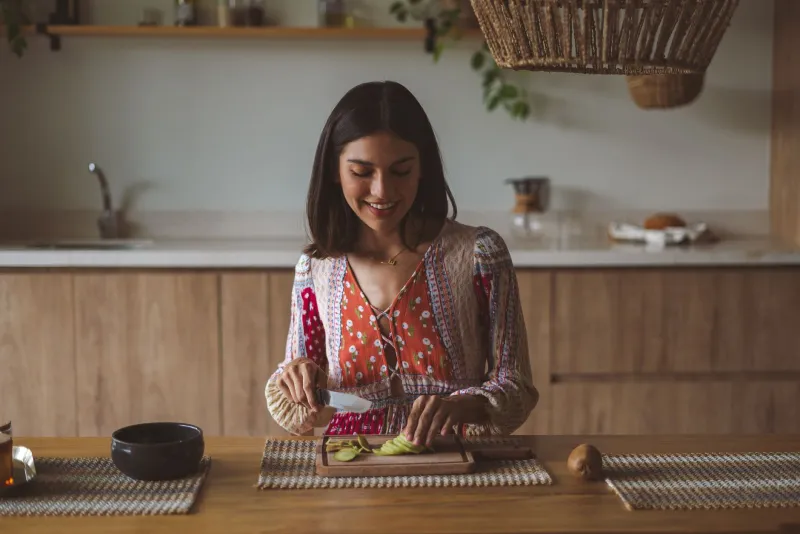
If a small plate feels like too much, try a five-minute job instead. Set a timer if you like. Chop an onion. Rinse the salad. Put the potatoes on. Open a tin. Measure out rice. Clear the bit of counter where you will actually cook.
This is not about being efficient. It is about breaking the deadlock. Once the onion is chopped, dinner has started, even if the rest of it is still an idea. A five-minute job also gives your hands something to do while the kettle boils, which is often when the biscuits appear.
Pick the job before you walk into the kitchen, if you can. A sticky note on the fridge is not glamorous, but it works. So does a simple rule: kettle on, one job done.
Set the table, even badly
Setting the table is one of those tasks that feels pointless until you do it. It does not need to be a full cutlery-and-napkin situation. A placemat, a glass of water, a plate that is not still in the dishwasher from yesterday. That is enough.
The table is a signal. It tells your brain that food is coming and that you are not just going to eat standing up over the sink. If you eat on the sofa, clear the coffee table. If the kids are around, give them a job: forks, cups, something that makes them part of the transition rather than a distraction from it.
This is not about table manners or making dinner into an event. It is about creating a physical boundary between the gap and the meal.
Build a gap shelf, not a guilt shelf
It helps to have bridge foods where you can see them. A shelf in the fridge or a basket in the cupboard with the things that work for you: yoghurt, fruit, crackers, hummus, nuts, oatcakes, a bit of cheese. Put them at eye level. Move the biscuits if you need to, not because they are banned, but because you are trying to make the first thing you see a thing that helps.
This is not a rulebook. It is a small bit of environmental design. You are allowed to eat the biscuits. You are also allowed to make it slightly easier to eat an apple first.
When it goes wrong, dinner still happens
Some days you will eat the crisps. You will eat them standing up, quickly, and then you will not fancy dinner. That is not a failure. It is a Tuesday. The plan is not to be perfect; the plan is to keep tea in the picture.
If you have overdone it, adjust the meal rather than abandoning it. A smaller portion, more vegetables, a lighter sauce. If you are not hungry, have something small and call it a compromise. The worst outcome is not the crisps. The worst outcome is deciding the day is ruined and ordering something you did not really want.
A sample gap routine for real life
At around 5:30, put the kettle on and make a small plate. Eat it sitting down. At 5:35, do one five-minute job that moves dinner forward. At 5:40, set the table or clear the surface where you will eat. Then start cooking when you are ready. Some days this will take twelve minutes. Some days it will take four. Both count.
The gap hour is not the enemy. It is part of the day, and it will keep happening. Give it a small, forgiving shape and it stops being a free-for-all. Before tea, not instead of tea. That is the whole plan.