The Hour Before Tea: Stocking for the Hungry Gap
Photo: Bjankuloski06, CC BY 4.0, via Wikimedia Commons
There is a point in the afternoon when the day has not finished but your energy has started packing up. The lunch you ate at noon feels like a distant memory. Tea is still an hour or two away. This is the hungry gap, and it is a completely ordinary part of the day.
The trouble is not that we get hungry then. The trouble is that we often arrive at that moment with nothing planned, nothing prepared and a vague sense that we should be able to power through on willpower alone. That is not a food strategy. That is a setup.
A snack shelf will not fix your sleep, your workload or the fact that November afternoons are dark by half past four. But it can make the hungry gap a lot less dramatic. The aim is simple: keep a small, realistic set of things within reach so the afternoon has options that fill a gap without demanding a lifestyle overhaul.
The gap is real, the guilt is optional
A lot of snack advice starts from the assumption that you are doing something wrong. You are not. Hunger in the late afternoon is normal. It can be influenced by lunch size, fibre, protein, hydration, stress, weather and whether you spent the day running around or sitting still. It is not a test of character.
The biscuit is not the problem. The problem is expecting one biscuit to do a job it was never designed to do. A biscuit is a nice thing. It is not always a filling thing. If you regularly reach for three because the first one left you exactly where you started, that is not greed. That is a snack doing insufficient work.
So the question is not “how do I stop snacking?” It is “what would actually help at four o’clock?” That is a much more useful question, and it usually has a practical answer.
A shelf with three jobs
A good snack shelf does three things. First, it has something that takes the edge off quickly. Second, it has something with a bit of staying power. Third, it has something that feels like a small pleasure rather than a punishment.
You do not need three separate shelves. You need a short list that covers those bases. A handful of nuts and a couple of oatcakes can do the first two jobs. A pot of yogurt or a slice of malt loaf can do the third. A tinned peach or a few dried apricots can sit happily in between.
The point is not to build a perfect pantry. The point is to remove the blank-stare moment. When you open the cupboard and see nothing, you are more likely to end up with whatever is easiest and least satisfying. When you open it and see two or three things that are genuinely yours, the decision gets much smaller.
The cupboard half
Keep this side simple and visible. If it is at the back of a cupboard behind the gravy granules, it does not count.
Tinned fruit is underrated. Peaches, pears, pineapple, mandarins — the ones in juice rather than syrup are perfectly good, and they keep for ages. A small bowl of tinned peaches with a spoonful of yogurt is a proper snack. It takes thirty seconds and feels like more than the sum of its parts.
Oatcakes are a useful base because they are sturdy, cheap and not so exciting that you eat the whole packet without noticing. Add cheese, hummus, a bit of butter, or whatever is open in the fridge. Nuts are another good standby, but keep the portion in mind. A big bag can become a bottomless bag if you are distracted. A small bowl or a handful tipped onto a plate is usually enough.
Malt loaf, fruit bread, crackers, peanut butter, a jar of olives, a few squares of dark chocolate — these are all legitimate residents. So is a box of cereal if that is what you actually eat. The shelf should reflect your real life, not an imaginary version of it.
The fridge half
Not everything belongs in a cupboard, and the fridge half of the equation is often where the useful stuff lives.
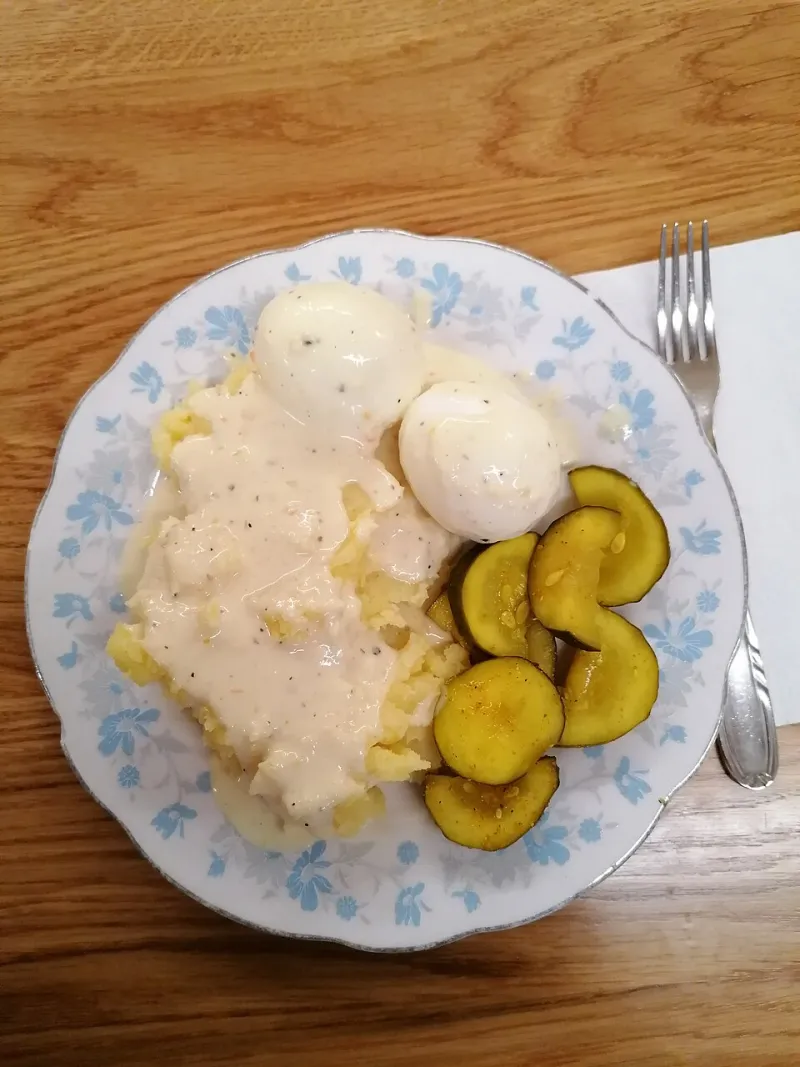
Boiled eggs are a classic for a reason. Cook a couple while you are making dinner, keep them in a bowl at the front of the fridge, and they become a snack rather than an ingredient you meant to use. Hummus is another good one. So is a tub of yogurt, a block of cheddar, some edamame, or a bag of carrots that has already been opened and is therefore more likely to be eaten.
The trick is placement. A cucumber at the bottom of the drawer is a good intention. A tub of hummus on the shelf at eye level is a snack. Move the things you want to eat to where you will see them. This is not a complicated system. It is just giving the useful food a fair chance.
What actually gets eaten
This is the part that matters most. A snack shelf stocked with things you feel you should eat is not a snack shelf. It is a museum of good intentions.
Start by noticing what you already reach for, then work with it. If you always want something sweet at four o’clock, keep a good option for that: tinned fruit, a couple of dates, a small yogurt, a square of chocolate. If you want something crunchy and savoury, make sure there are oatcakes or nuts or a bit of cheese. If you want a cup of tea and something to go with it, plan for that too.
The goal is not to eliminate the biscuit. The goal is to make sure the biscuit is not the only thing standing between you and a headache. A biscuit alongside a handful of nuts is a different snack from a biscuit on its own. One is a small treat. The other is a sugar hit followed by a slump.
A short list to start
You do not need a full overhaul. Pick four or five things and put them where you can see them. For example: oatcakes, a jar of peanut butter, tinned peaches, a tub of hummus and a bag of nuts. That is a working shelf. It covers quick, filling and pleasant. It costs less than a takeaway and it will survive the week.
Next time you do a shop, add one thing that makes the shelf feel a bit more like yours. A new flavour of hummus. A different tinned fruit. A packet of nice crackers. This is not about being virtuous. It is about being prepared for a moment that happens every single day.
The hungry gap is not going anywhere. But it does not have to be a crisis. Put a few useful things within reach, leave the biscuit alone, and let the afternoon be a bit less of a scramble.