The Drawer You Can Cook From: A Ten-Minute Spice Reset
Most weeknight cooking doesn't fail at the chopping board. It fails at the drawer. You open it looking for something to make the mince taste like more than mince, and you're met with a jumble of jars, half of them inherited, a few of them ancient, and one at the back that might be cumin or might be dust. At that point, the takeaway app starts looking less like a failure and more like a sensible plan.
The fix isn't another recipe or a new blend with a nice label. It's knowing what you've already got. Ten minutes with the spice drawer, once in a while, can do more for your weeknight cooking than another supermarket run. Not because there's anything noble about sorting jars, but because a drawer you can read is a drawer you'll actually use.
Empty it out. All of it.
Start by taking everything out and putting it on the table or worktop. No ceremonial music, no label maker. Just empty the drawer. You'll probably find duplicates, a jar of something you bought for one recipe in 2023, and at least one lid that doesn't belong to anything.
Group things roughly as you go: the everyday stuff, the once-a-year stuff, the mysteries. Don't try to organise yet. The point is to see what's there. Most of us are cooking from a mental list of about five spices while owning fifteen. That gap is where weeknight frustration lives.
The smell test is the only test that matters
Spices don't go off in the way milk does, but they do go quiet. A ground spice that's been open for years can look fine and taste of almost nothing. The date on the jar is a guide, not a verdict. The real test is your nose.
Crush a little between your fingers or in a mug, then smell it. Cumin should smell like cumin. Smoked paprika should smell smoky. If it smells like paper, dust or vaguely warm nothing, it's not doing a job. Bin it, compost it if you can, or use the jar for something else. This isn't about being ruthless for the sake of it. It's about not seasoning dinner with hope.
Whole spices last longer than ground ones, so keep that in mind. But don't turn this into a science project. You're not running a lab. You're trying to make tea.
Build a small working set
A working set is the handful of jars you reach for without thinking. For most people, that's somewhere between seven and ten. It might include ground cumin, coriander, smoked paprika, chilli flakes, turmeric, cinnamon, dried oregano, black pepper and maybe a curry powder or garam masala if those are genuinely part of your week.
If you cook a lot of one kind of food, keep that cuisine's trio together. There's no prize for having a perfectly international drawer. The best spice collection is the one that gets used on a Tuesday when you're tired and the fridge is half empty.
This is also why I'd hold off on buying another blend until you've used the singles you own. Blends can be brilliant, but they often duplicate what's already in the drawer. If a blend earns its place by being used most weeks, fine. If it's there because the label looked nice, it's just taking up room.
Put the everyday jars where you can see them
A drawer is fine, but visibility matters. If the jars you use most are buried behind the ones you use twice a year, you'll default to salt and pepper and call it a day. Try a small tray or a front-row shelf inside the cupboard. Keep the everyday set at eye level or at the front of the drawer. Move the occasional jars to a box at the back, or to a higher shelf if you've got one.
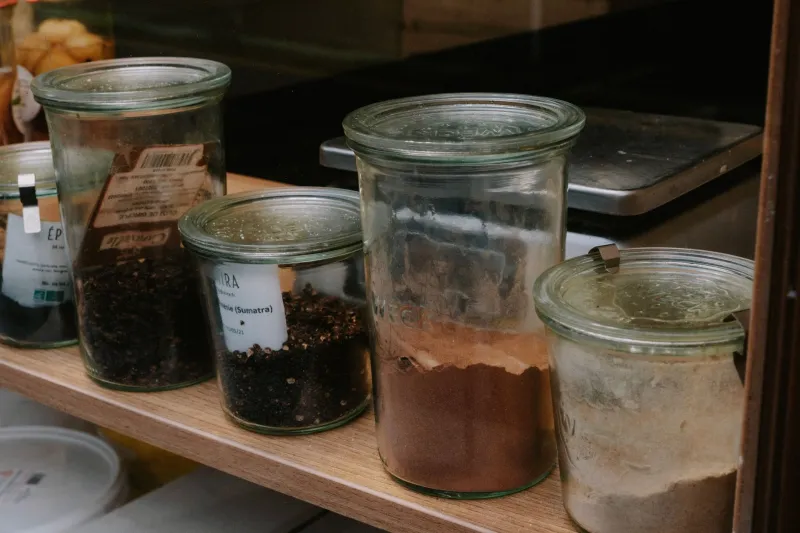
If you decant into matching jars, label the lids. Pretty jars are lovely until you've got three brown powders and no idea which one is cumin. A strip of masking tape and a pen is enough. This isn't Instagram; it's dinner.
A reset you can actually repeat
You don't need a spreadsheet or a seasonal calendar. A good rule is: do this when the drawer stops closing easily, or when you notice you're buying a spice you suspect you already own. Ten minutes, once every few months, is plenty.
The steps are simple. Empty the drawer. Smell the jars. Bin what's gone quiet. Pick the working set. Put it where you can see it. Put the rest somewhere else. Wipe the drawer. Close it. That's it.
The point isn't a perfect drawer. It's a lower-friction one. When you know what you own, you season with a bit more confidence. You stop buying duplicates. You use the paprika before it turns to brown dust. And weeknight cooking feels slightly less pointless, because you're not starting from a mystery every time.
That's worth ten minutes. Especially on a Wednesday.